Crear
Descargar
Obtener Plan Académico
Compartir juego
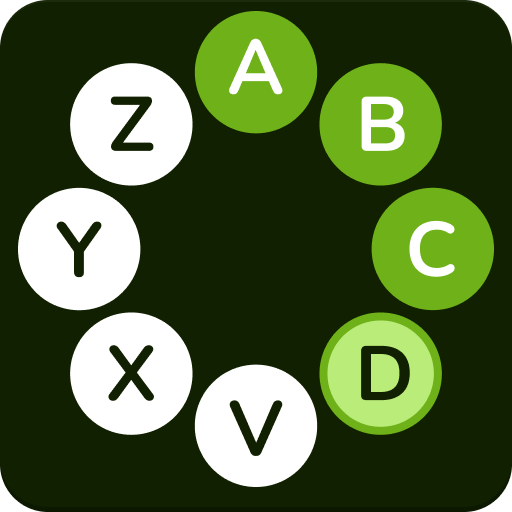
Ruleta de Palabras
Ruleta de Palabras

Chemistry Alphabet Challenge

Intégralo en tu plataforma

Puedes integrar el juego en un LMS compatible con LTI 1.1 o LTI 1.3 como Canvas, Moodle, o Blackboard. De esta manera podrás guardar las puntuaciones automáticamente en el libro de calificaciones de esa plataforma.
Descargar
Has superado el número máximo de juegos que puedes integrar en Google Classroom con tu Plan actual.

Para integrar tantos juegos como quieras en Google Classroom, necesitas un Plan Académico o un Plan Comercial.

Has superado el número máximo de juegos que puedes integrar en Microsoft Teams con tu Plan actual.

Para integrar tantos juegos como quieras en Microsoft Teams, necesitas un Plan Académico o un Plan Comercial.

La descarga de juegos es una característica exclusiva para usuarios con un Plan Académico o un Plan Comercial.

Obtén ahora tu Plan Académico o Comercial y comienza a integrar tus juegos en tu LMS, web o blog.

Si lo deseas, puedes descargar un juego de prueba aquí y probar su integración:

Chemistry Alphabet Challenge

Ruleta de Palabras

Jugadas 2

Sobre esta actividad

Guess the chemistry-related word for each letter of the alphabet!

Creada por

Estados Unidos

Descarga la versión para jugar en papel

Crea tu propio juego gratis desde nuestro creador de juegos
Compite contra tus amigos para ver quien consigue la mejor puntuación en esta actividad

Top juegos

%
Anónimo
Anónimo
%
%
%
Has superado el número máximo de juegos que puedes imprimir con tu Plan actual.

Para imprimir tantos juegos como quieras, necesitas un Plan Académico o un Plan Comercial.

Imprime tu juego
Chemistry Alphabet Challenge
 

Chemistry Alphabet ChallengeVersión en línea

Guess the chemistry-related word for each letter of the alphabet!

por Pachi Araujo
A
B
C
D
E
F
G
H
I
J
K
L
M
N
O
P
Q
R
S
T
U
V
W
X
Y
Z

Commence par A

The smallest unit of a chemical element, consisting of a nucleus and electrons.

Commence par B

A lasting attraction between atoms that enables the formation of chemical compounds.

Commence par C

A substance that increases the rate of a chemical reaction without being consumed.

Commence par D

Molecules composed of two atoms, which can be of the same or different elements.

Commence par E

A measure of an atom's ability to attract and hold onto electrons.

Commence par F

A metabolic process that converts sugar to acids, gases, or alcohol using microorganisms.

Commence par G

A state of matter characterized by low density and viscosity, and high compressibility.

Commence par H

The lightest and most abundant chemical element, often found in water and organic compounds.

Commence par I

An atom or molecule that has gained or lost one or more electrons, resulting in a charge.

Commence par J

A unit of energy in the International System of Units, often used in chemistry.

Commence par K

The study of the rates of chemical reactions and the factors affecting them.

Commence par L

A soft, silvery-white metal and the lightest metal, used in batteries and medications.

Commence par M

A group of two or more atoms bonded together, representing the smallest fundamental unit of a chemical compound.

Commence par N

The basic building block of nucleic acids, consisting of a sugar, phosphate group, and nitrogenous base.

Commence par O

A chemical reaction that involves the loss of electrons or an increase in oxidation state.

Commence par P

A scale used to specify the acidity or basicity of an aqueous solution.

Commence par Q

A fundamental particle and a basic constituent of matter, combining to form protons and neutrons.

Commence par R

A substance used to cause a chemical reaction or to test for the presence of another substance.

Commence par S

A substance that dissolves a solute, forming a solution, often a liquid.

Commence par T

A technique used to determine the concentration of a solute in a solution by adding a reagent.

Commence par U

A heavy metal used as fuel in nuclear reactors and in the production of nuclear weapons.

Commence par V

The measure of an atom's ability to bond with other atoms, often determined by its electron configuration.

Commence par W

The distance between successive crests of a wave, often used in the context of electromagnetic radiation.

Commence par X

A colorless, dense noble gas used in lighting and as a general anesthetic.

Commence par Y

A silvery-metallic element used in various applications, including LEDs and superconductors.

Commence par Z

A metallic element essential for biological functions and commonly used in galvanization.

¿Estás seguro que quieres abandonar la página?

Al abandonar la página perderás el progreso del juego.