Crear
Descargar
Obtener Plan Académico
Compartir juego
Intégralo en tu plataforma

Puedes integrar el juego en un LMS compatible con LTI 1.1 o LTI 1.3 como Canvas, Moodle, o Blackboard. De esta manera podrás guardar las puntuaciones automáticamente en el libro de calificaciones de esa plataforma.
Descargar
Has superado el número máximo de juegos que puedes integrar en Google Classroom con tu Plan actual.

Para integrar tantos juegos como quieras en Google Classroom, necesitas un Plan Académico o un Plan Comercial.

Has superado el número máximo de juegos que puedes integrar en Microsoft Teams con tu Plan actual.

Para integrar tantos juegos como quieras en Microsoft Teams, necesitas un Plan Académico o un Plan Comercial.

La descarga de juegos es una característica exclusiva para usuarios con un Plan Académico o un Plan Comercial.

Obtén ahora tu Plan Académico o Comercial y comienza a integrar tus juegos en tu LMS, web o blog.

Si lo deseas, puedes descargar un juego de prueba aquí y probar su integración:

Language Acquisition and Second Language Learning

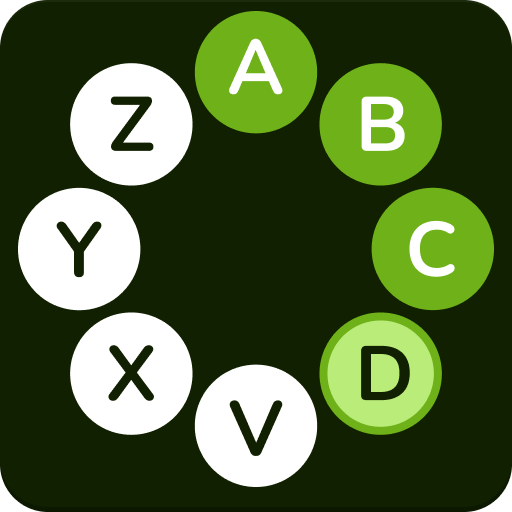
Ruleta de Palabras

Jugadas 4

Sobre esta actividad

We'll revise some key concepts from unit one.

Creada por

Argentina

Descarga la versión para jugar en papel

Crea tu propio juego gratis desde nuestro creador de juegos
Compite contra tus amigos para ver quien consigue la mejor puntuación en esta actividad

Top juegos

%
Anónimo
Anónimo
%
%
%
Has superado el número máximo de juegos que puedes imprimir con tu Plan actual.

Para imprimir tantos juegos como quieras, necesitas un Plan Académico o un Plan Comercial.

Imprime tu juego
Language Acquisition and Second Language Learning
 

Language Acquisition and Second Language LearningVersión en línea

We'll revise some key concepts from unit one.

por Giorgina Ponsetti
A
B
C
D
E
F
G
H
I
K
L
M
N
O
P
Q
R
S
T
U
V
W
X
Y
Z

Starts with A

A method that attempted to engender good habits in language learners using the stimulus–response–reinforcement model.

Starts with B

A theory of learning that suggests that children learn to speak by imitating the speech patterns of those around them. Positive reinforcement, such as praise or rewards, strengthens the likelihood of repeating correct language behaviors.

Starts with C

A unique style of communication used by adults when interacting with infants and young children. (3 words)

Starts with D

The predictable order or stages through which individuals, regardless of age or first language, progress in acquiring a language. (2 words)

Starts with E

A linguistic and educational approach that examines errors made by language learners to understand the underlying reasons for those mistakes. (2 words)

Starts with F

The process in which incorrect language becomes a habit and cannot easily be corrected.

Starts with G

A method to teach languages in which students are given explanations of individual points of grammar, and then they are given sentences which exemplify these points that have to be translated from L2 back to L1 and vice versa. (2 words)

Contains H

A language learning method in which instructors give commands to students in the target language and students respond with whole-body actions. (3 words)

Starts with I

The language system developed by a second / foreign language learner as they progress in learning the target language, distinct from both their native language and the target language.

Starts with K

An American linguist who developed the 'Monitor Model' which highlights the importance of providing learners with meaningful input and opportunities for natural communication to foster acquisition.

Starts with L

A conscious and deliberate process of studying language rules and grammar, often through formal instruction.

Starts with M

The process of imitating or copying the speech patterns, pronunciation, and even intonation of native speakers.

Starts with N

One of the most infuential figures in linguistics, who states that all human languages are based on some innate universal principles. (2 words)

Contains O

... of meaning: a process that speakers go through to reach a clear understanding of each other, asking for clarification, paraphrasing, or using non-verbal cues.

Starts with P

The active and repeated application of language skills, including vocabulary, grammar, and pronunciation, to enhance fluency and proficiency.

Contains Q

The natural, subconscious process of learning a language, especially a first language, through exposure and real-world communication.

Starts with R

A cognitive process where learners reorganize their existing knowledge and strategies to incorporate new language elements and achieve more efficient communication.

Starts with S

A teaching method where the educator helps support students to complete tasks just beyond the level that they could achieve by themselves.

Starts with T

The replication of rules from our first language (L1) to the second language (L2).

Starts with U

A theory proposing that humans are born with an innate capacity to acquire language, including an understanding of fundamental grammatical principles. (2 words)

Starts with V

A Russian psychologist who stated that language develops primarily from social interaction.

Contains W

A methodology of teaching language based on the idea that teachers should be as silent as possible during a class but learners should be encouraged to speak as much as possible. (2 words)

Contains X

A method of teaching that centers around the theory that language is composed of lexical “chunks” as opposed to grammar structures. (2 words)

Contains Y

A linguistic theory that suggests that children who are not given access to language in infancy and early childhood will never acquire language if these deprivations go on for too long. (3 words)

Starts with Z

A methaphorical place in which children can do more than they would be capable of doing independently. (4 words)

¿Estás seguro que quieres abandonar la página?

Al abandonar la página perderás el progreso del juego.