Crear
Descargar
Obtener Plan Académico
Compartir juego
Intégralo en tu plataforma

Puedes integrar el juego en un LMS compatible con LTI 1.1 o LTI 1.3 como Canvas, Moodle, o Blackboard. De esta manera podrás guardar las puntuaciones automáticamente en el libro de calificaciones de esa plataforma.
Descargar
Has superado el número máximo de juegos que puedes integrar en Google Classroom con tu Plan actual.

Para integrar tantos juegos como quieras en Google Classroom, necesitas un Plan Académico o un Plan Comercial.

Has superado el número máximo de juegos que puedes integrar en Microsoft Teams con tu Plan actual.

Para integrar tantos juegos como quieras en Microsoft Teams, necesitas un Plan Académico o un Plan Comercial.

La descarga de juegos es una característica exclusiva para usuarios con un Plan Académico o un Plan Comercial.

Obtén ahora tu Plan Académico o Comercial y comienza a integrar tus juegos en tu LMS, web o blog.

Si lo deseas, puedes descargar un juego de prueba aquí y probar su integración:

Errors in measurement (Lowersixth Science Physics)

Sí o No

Jugadas 0

Sobre esta actividad

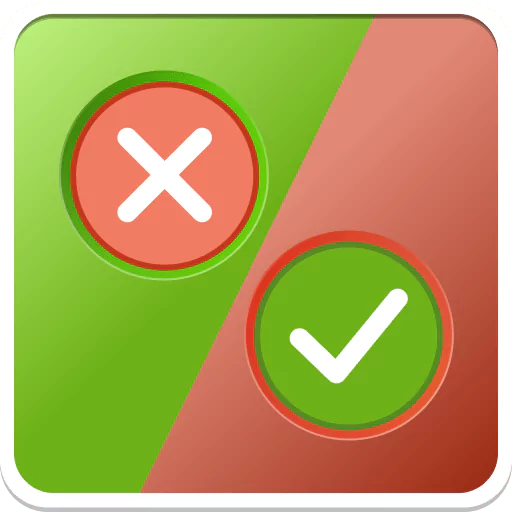
In this game, players will determine whether the given nouns are types of errors in physics or not. Players will respond with ✅ for correct answers and ❌ for incorrect ones. Test your knowledge of physics terminology and error classification!

Creada por

Camerún

Descarga la versión para jugar en papel

Crea tu propio juego gratis desde nuestro creador de juegos
Compite contra tus amigos para ver quien consigue la mejor puntuación en esta actividad

Top juegos

%
Anónimo
Anónimo
%
%
%
Has superado el número máximo de juegos que puedes imprimir con tu Plan actual.

Para imprimir tantos juegos como quieras, necesitas un Plan Académico o un Plan Comercial.

Imprime tu juego
Errors in measurement (Lowersixth Science Physics)
 

Errors in measurement (Lowersixth Science Physics)Versión en línea

In this game, players will determine whether the given nouns are types of errors in physics or not. Players will respond with ✅ for correct answers and ❌ for incorrect ones. Test your knowledge of physics terminology and error classification!

por YAKILI LMS
1

Sampling error

2

Human error

3

Temperature

4

Acceleration

5

Friction

6

Instrumental error

7

Systematic error

8

Quantization error

9

Pressure

10

Mass

11

Velocity

12

Measurement error

13

Momentum

14

Statistical error

15

Parallax error

16

Energy

17

Force

18

Random error

19

Gravity

20

Calibration error

21

The shape of a graph does not influence error analysis.

22

Error calculation is only relevant in chemistry, not physics.

23

Error propagation is important when combining multiple measurements.

24

Statistical analysis is often used to assess experimental errors.

25

Measurement uncertainty is a key concept in error calculation.

26

Systematic errors can be minimized through careful calibration.

27

The taste of a substance is a factor in error measurement.

28

A ruler is not used in physics experiments.

29

The temperature of a room has no effect on measurement errors.

30

A control experiment helps identify sources of error.

31

Gravity is a force that cannot be calculated.

32

Error calculation is unrelated to the speed of light.

33

Significant figures are crucial in reporting measurement results.

34

Precision and accuracy are essential in scientific measurements.

35

Fictional characters cannot be used in scientific calculations.

36

Error calculation is not necessary for theoretical physics.

37

Calibration of instruments is necessary for accurate data collection.

38

The standard deviation is a measure of the dispersion of data.

39

Random errors can be reduced by taking multiple measurements.

40

The color of an object does not affect its measurement errors.

41

An example of absolute error is 5.0 - 4.8 = 0.2.

42

Relative error is only applicable in chemistry.

43

Errors in measurement do not impact scientific conclusions.

44

Absolute error is the difference between the measured value and the true value.

45

A higher relative error indicates better accuracy.

46

Relative error is calculated by dividing the absolute error by the true value.

47

A systematic error can lead to a consistent absolute error.

48

The formula for relative error is (absolute error / true value) x 100%.

49

Calibration of instruments can minimize absolute errors.

50

The true value is irrelevant when calculating absolute error.

¿Estás seguro que quieres abandonar la página?

Al abandonar la página perderás el progreso del juego.